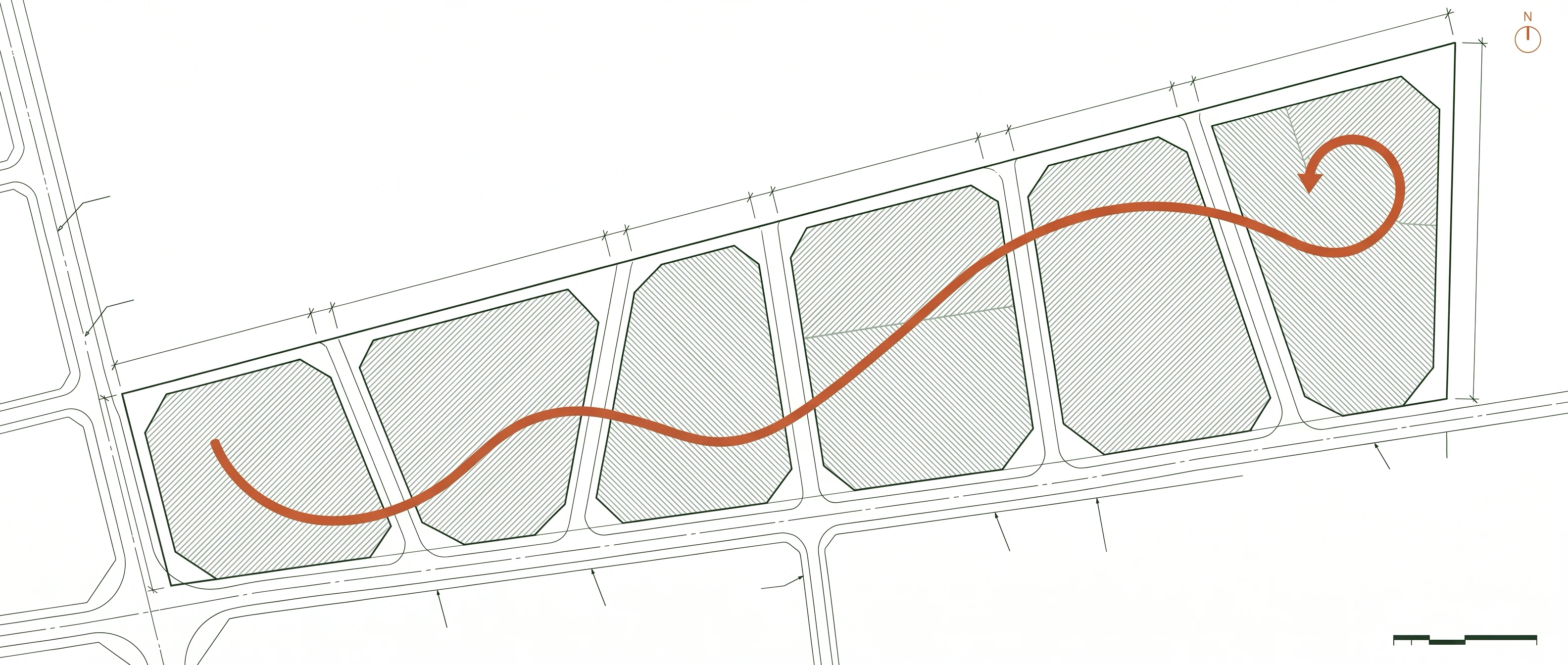
The Cycle
One developmental loop runs through every district. What ZAN does changes as the person develops; the loop does not.
- Potential
- Discovery
- Learning
- Practice
- Experience
- Reflection
- Capability
- Contribution
and back to renewed potential
The Idea
What would an institution look like if its responsibility was not simply to educate a child until graduation, but to intentionally develop the human being across the different stages of life?
The Academy is ZAN’s education component. The larger purpose is to maximize human capability throughout life, and to turn that capability into meaningful contribution.
Academics stay fundamental. Mathematics, science, literacy, languages and qualifications are not traded away in the name of being innovative. Academic achievement is one part of human capability, and ZAN develops it alongside the rest:
- Knowledge
- Judgment
- Character
- Communication
- Physical and mental wellbeing
- Creativity
- Relationships
- Responsibility
- Economic capability
- Independence
- Leadership
- Contribution to society
The Districts
A schedule of the plan, read from the first stage to the last.
Detail A: Percentages
How one piece of knowledge travels through the plan. Discovery is not always the method: foundations are taught explicitly, then applied.
- Knowing it
- Using it
- Exercising judgment with it
- Using it independently and responsibly
- Understand the mathematics, through explicit instruction, modeling and guided practice.
- Practice it, with repetition, retrieval, feedback and checks for mastery.
- Apply it in a supervised project: discounts, margins, budgets, profit.
- Reflect: explain the decision, find the mistake, correct it.
- Transfer the same principle, independently, to a completely different situation.
Evidence
General notes on this drawing.
- Evidence-informed, not single-method. ZAN draws on research across cognitive development, instruction, memory, assessment, motivation, metacognition, physical development, wellbeing, behavior and social development, using different proven approaches by stage and by what is being learned.
- The method yields to the evidence. If evidence contradicts one of ZAN’s assumptions, the method changes. The research is not selected to agree with the founder.
- The whole has to earn its evidence. Many of the individual principles have research behind them. Putting them together into the complete ZAN architecture is a proposition, and it needs pilots, measurement, academic benchmarking, longitudinal evidence, external expertise, and people prepared to challenge the model.
- No one is reduced to a grade. Academic mastery is measured. Over time, so are application, behavior, responsibility, reflection, improvement and contribution. A developmental profile stays dynamic, because people change.
- This plan is conceptual. It maps an institution, not a site. ZAN has no campus yet.
Not simply someone who has passed exams. Someone who knows, can think, can act, can take responsibility, can create value, can keep developing, and can contribute what they have become to others.